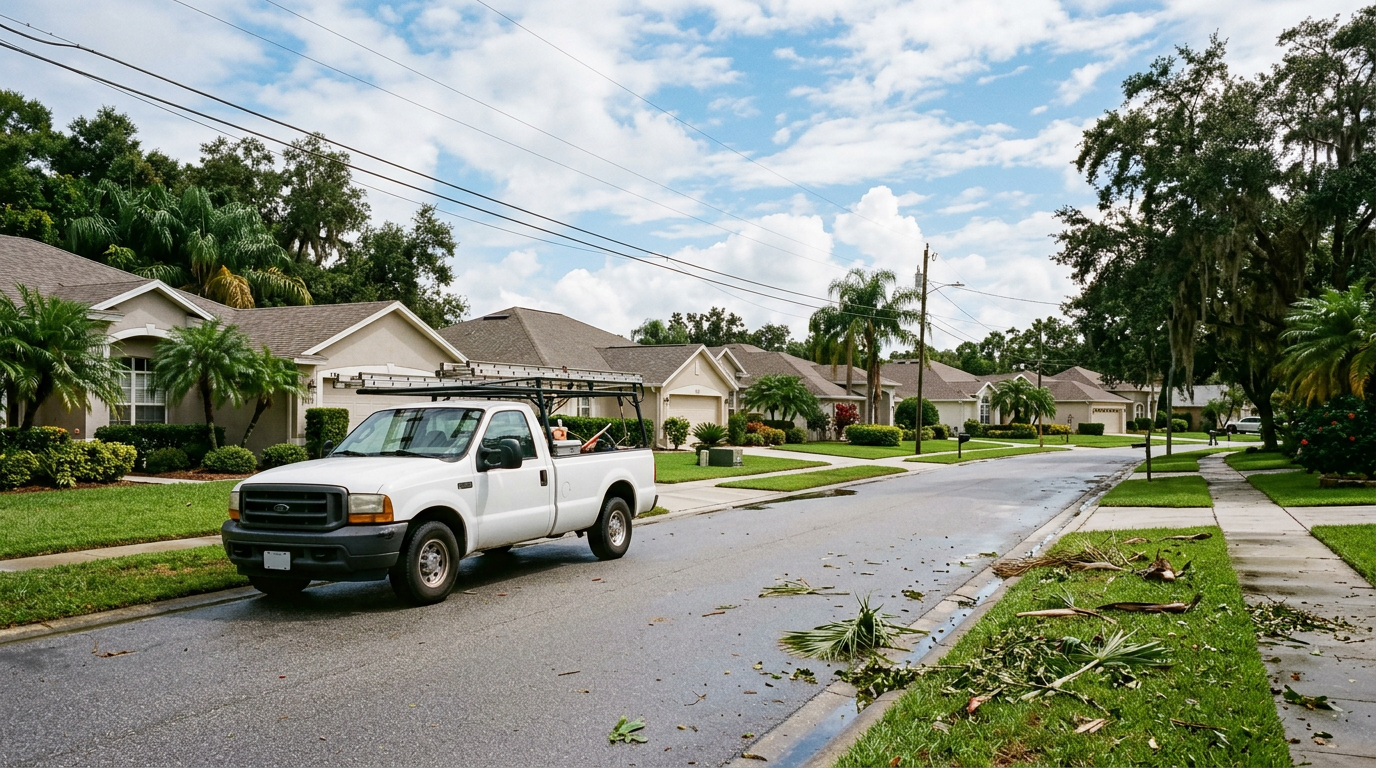
The wind dies down, tree limbs litter the driveway, and within forty-eight hours an unfamiliar truck rolls through your street. A person walks up to your front door, knocks, points to your roof, and insists that you have catastrophic storm damage that must be signed for immediately. Recognizing roofing scams after a hurricane in Florida starts with slowing down and looking closely at who is standing on your porch.
Every major storm brings out-of-state crews and transient operations into Central Florida. These traveling crews move quickly from neighborhood to neighborhood across Orlando, Kissimmee, and Sanford, looking to lock property owners into hurried agreements before moving on to the next storm zone. Protecting your home requires knowing what signs to watch for and what basic verifications to run before anyone touches your shingles or tiles.
Signs of a storm chaser roofer in your neighborhood
A storm chaser roofer typically relies on speed and urgency. They want your signature on paper before you have time to look around your property, speak with a neighbor, or research their business background.
The first signal is unsolicited door-knocking immediately after wind or rain events. Established roofing contractors in Central Florida stay busy responding to direct calls from their regular clients and neighbors. Crews driving unmarked vans or pickup trucks with out-of-state license plates who go street by street are usually following weather tracks across state lines.
The second signal is heavy pressure to sign an agreement right on the porch. The visitor might claim that material prices will spike by tomorrow, that their crew is only in your subdivision for two days, or that you will lose your place in line if you do not sign on the spot. Legitimate contractors give you clear written estimates and allow you the time you need to review details calmly.
Offers regarding insurance deductibles and upfront cash
One of the most persistent red flags involves illegal promises about your insurance deductible. A transient salesperson might tell you that their company will absorb, waive, or credit your deductible, or hand you a gift card in exchange for signing up.
Under Florida Statutes 489.147, it is strictly unlawful for a roofing contractor to pay, waive, rebate, or promise anything of value toward a residential property owner’s deductible. Any company making this claim is asking you to participate in an illegal scheme. Your insurance company decides coverage and payment, and you are responsible for paying your deductible directly.

Another warning sign is demanding large cash deposits before delivering materials or scheduling work. Under Florida Statutes 489.126, a contractor who receives a deposit exceeding ten percent of the contract price must apply for the necessary building permits within thirty days and start work within ninety days of permit issuance. Demanding full payment upfront or requesting cash without a detailed contract leaves you with no recourse if the crew leaves town.
How to check a roofer’s license in Florida in ten minutes
You can verify whether a contractor is qualified to work on your home before inviting them onto your roof. Taking ten minutes to check state records eliminates most deceptive operators.
To check a roofer’s license in Florida, open your browser and visit the official Department of Business and Professional Regulation portal at myfloridalicense.com. Look up the contractor by their full company name or individual license number. The license status must read current and active, with certified roofing contractor or registered roofing contractor designations matching the person or business named on your estimate.
If the person at your door cannot supply a state license number, or tells you that they operate under someone else’s qualifying license who is not on-site, pause immediately. A legitimate roofer with a state license displays their license details clearly on their paperwork, vehicle signage, and formal proposals.
Why building permits and written estimates protect you
Storm chasers frequently bypass municipal building departments to save time and avoid official scrutiny. In Florida, roof replacements and substantial repairs require a formal building permit issued by your local city or county building division, whether you live in Orange County, Seminole County, or Osceola County.
When a contractor replaces a roof without a permit, your local building inspector never evaluates the roof decking, underlayment attachment, or final fastening pattern. This can create severe difficulties during future home sales, insurance policy renewals, or subsequent wind mitigation inspections.

Demand a written, itemized estimate that breaks down the full scope of work, including tear-off, decking replacement allowances, underlayment grade, flashing details, ridge ventilation, and clean-up. A vague one-page sheet with a single lump-sum figure does not provide the clarity required to protect your property.
What to do from the ground right after a storm
You do not need to climb onto your roof to check for storm damage. Walking on steep slopes or damaged shingles poses serious fall risks and can easily crush loose tile or dislodge wet granules.
Step back into your front and back yard and look up at the roof edges, ridges, and valleys. Note if there are missing shingles, displaced ridge caps, or dented metal flashing around the chimney and plumbing pipes. Look at the ground for shingle pieces, loose nails, or broken tile fragments.
Inside your house, check your ceilings and upper walls for dark water stains or peeling paint, especially around light fixtures, closet corners, and skylights. Place a bucket under active drips to prevent floor damage, keep away from wet electrical areas, and take clear photos with your phone to record your observations.
Frequently asked questions
Can a roofing contractor pay my deductible in Florida?
No. Florida law strictly prohibits roofing contractors from paying, waiving, absorbing, or rebating any portion of a homeowner’s insurance deductible under Florida Statutes 489.147. You are responsible for your deductible.
How do I know if a roofer is licensed in Florida?
You can search the contractor’s name or license number directly on the Florida Department of Business and Professional Regulation portal at myfloridalicense.com. An active certified or registered roofing contractor license confirms they meet state requirements.
Does a roof repair require a building permit in Central Florida?
Yes. Roof replacements and repairs require a building permit from your local municipal or county building department. Your contractor must pull the permit and display it on the job site so local inspectors can verify the work.
What should I do if an uninvited roofer knocks on my door?
Ask for their full company name, physical office address, and state license number without signing any documents. Check their license online, request a written itemized estimate, and take time to compare your options calmly before making any commitment.
SkyShield Roofing Pros provides free roof inspections with detailed photos and written, itemized estimates for homeowners across Orlando, Kissimmee, Sanford, and Central Florida. We pull all required municipal permits on replacements and back our work with manufacturer warranties plus our 10-year workmanship warranty on full replacements, serving you in English and Spanish.
Leave a Reply