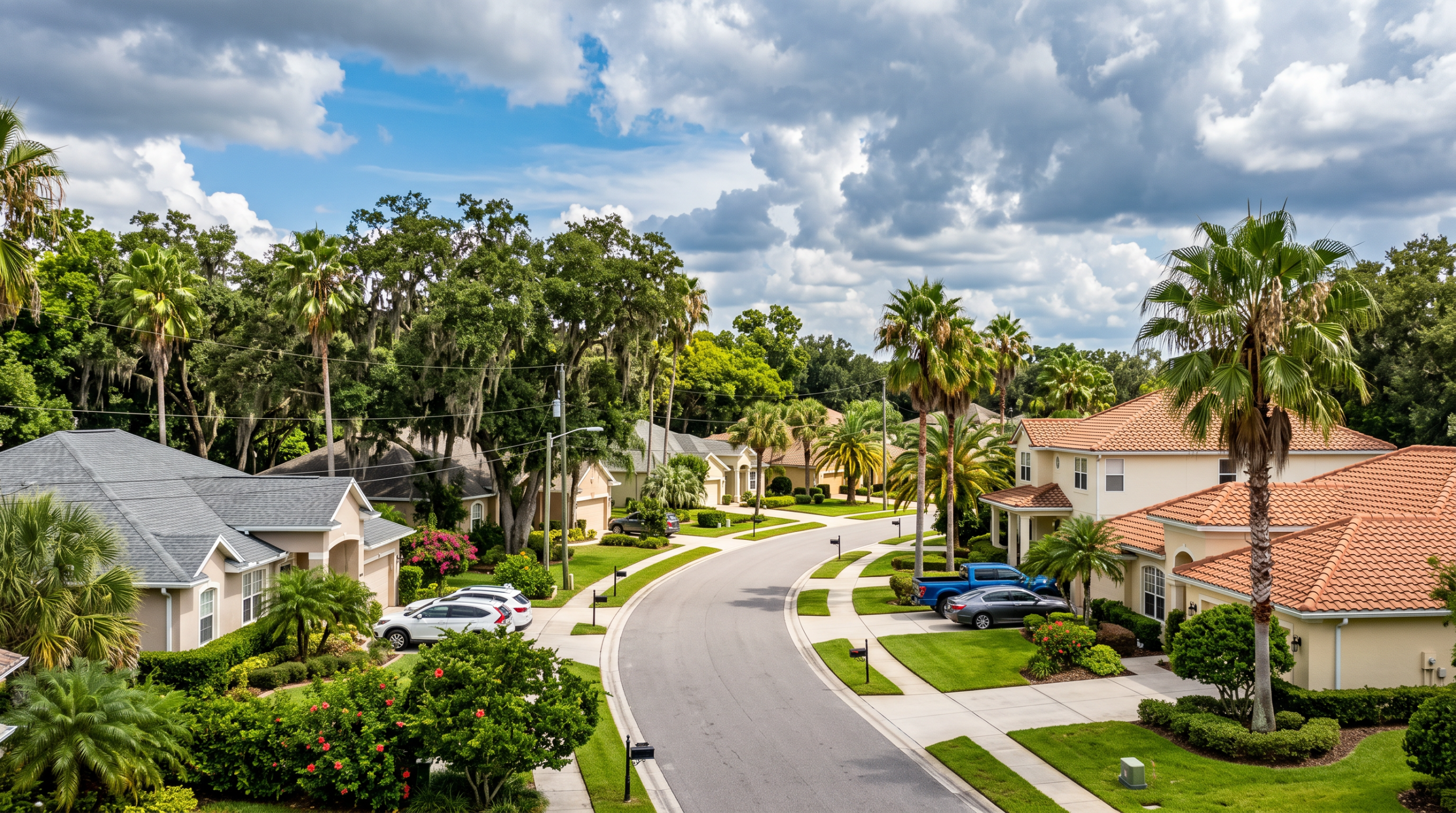
I sit atop your home through three hundred and sixty-five days of sunshine, high humidity, and afternoon cloudbursts. When you look at Florida weather and your roof from the driveway, you see architectural shingles, neat ridge caps, and aluminum gutters, but up here every season tells a vivid story. A Central Florida year does not follow the traditional four-season pattern of snow, thaw, heat, and frost. Instead, it moves through distinct shifts in sunlight intensity, moisture, wind, and barometric pressure that test every nail, seal, and granule.
What spring brings to shingles and gutters
Spring in Orlando begins with brilliant blue skies and rising daytime temperatures that quickly wake up the neighborhood. For a roof, March and April bring an unmistakable blanket of fine golden-green live oak pollen. It coats every slope, settles into the textured valleys of asphalt shingles, and gathers along drip edges. Soon after the pollen arrives, live oak trees shed their dry brown leaves and catkins, sending miniature waves of debris tumbling toward the eaves.
As spring breezes pick up across Orange County, dry leaf matter accumulates in gutters and around roof valleys. Morning dew dampens this organic material, creating heavy clusters that sit directly against metal valley flashing and roof edges. When gentle April showers roll through, that trapped debris slows the flow of water toward the downspouts. For a roof, spring is a time of preparing drainage pathways before the intense heat arrives.
What you can notice from the ground: Walk along your driveway on a bright Saturday morning and look at the bottom of your downspouts. You will likely see bright yellow pollen streaks washing across the concrete splash blocks, accompanied by small bundles of dry oak catkins poking above the gutter lip.
Summer heat and Orlando afternoon thunderstorms roof challenges
By late May, the midday sun beats down with fierce energy, heating the shingle surface far past the temperature of the air. Asphalt expands under this sustained thermal load, causing protective adhesive sealant strips to soften and grip tightly. Then, almost like clockwork around three o clock, towering dark cumulus clouds build along the sea-breeze collision over Central Florida.
The sudden arrival of an Orlando afternoon thunderstorms roof encounter is an intense experience. Within minutes, cold torrential rain slams against hot shingles and the air cools fast. This rapid thermal shock causes materials to contract quickly while millions of gallons of water rush toward the gutters. Strong wind gusts drive rain sideways against plumbing vent boots, chimney flashing, and gable vents. The roof sheds thousands of gallons of water in thirty minutes before the sun breaks back through the clouds, turning the neighborhood into a humid steam bath.

What you can notice from the ground: Check your downspout drainage areas after a heavy July downpour. Look for dark accumulations of fine mineral granules mixed with rainwater in your flowerbeds or on the driveway edge, indicating normal shedding from older shingles.
Standing ready during Atlantic hurricane season
According to NOAA, the Atlantic hurricane season runs from June 1 through November 30. During these months, the roof stands in constant readiness. Tropical waves and organized low-pressure systems bring sustained tropical-storm-force winds, prolonged torrential rains, and sudden shifts in wind direction across Central Florida.
High winds create uplift pressure along eaves, rakes, and ridge vents. Starter strip shingles and perimeter fasteners work tirelessly to keep edges sealed down tight so wind cannot get underneath. Flashing around skylights, vents, and roof valleys must channel water away despite hours of driving rain. When branches from nearby oak or pine trees sway close, the roof absorbs the friction of falling twigs and pinecones. Once the outer bands pass, the roof sheds the remaining moisture and settles back into the humid afternoon air.
What you can notice from the ground: Step out into the yard after a major wind event and scan your roofline against the open sky. Look for any lifted shingle corners, curled tabs, or pieces of metal flashing that appear misaligned or slightly raised along the eaves.
Winter relief and the role of roof care through the seasons
When the first strong cool front arrives in late November or December, the roof receives a welcome rest. Crisp, dry northern air replaces the heavy humidity. Bright, low-angled winter sun warms the shingles gently without the punishing heat of midsummer. Dew points drop, and afternoon rains become infrequent, giving materials an extended opportunity to remain completely dry.
Winter brings cooler nights where temperatures dip into the forties, allowing shingles to contract evenly and stabilize. With little rainfall, dead leaves and Spanish moss can settle into quiet valleys without immediately rotting. Practicing proactive roof care through the seasons means taking advantage of this mild winter window to assess how the roof held up against summer storms and hurricane season, clearing out gutters before spring pollen begins the cycle again.

What you can notice from the ground: On a clear winter morning, look up at the valleys where two roof sections meet. You will be able to see clearly whether pine needles, oak leaves, or moss have settled in the metal channels or behind the chimney.
Frequently asked questions
How does seasonal weather affect asphalt shingles in Orlando?
Shingles expand under intense summer heat and contract during cooler winter mornings. Daily afternoon rain accelerates wear on asphalt granules, while spring pollen and oak leaves can trap moisture if left in gutters.
When is the best time of year to inspect a roof in Central Florida?
Late spring before hurricane season begins on June 1 is an ideal inspection window. A second quick check in early winter helps spot any loose shingles or flashing gaps left behind by summer storms.
What can I check on my roof without climbing a ladder?
Walk around your yard with binoculars on a clear day to inspect shingle lines, roof edges, and flashing around chimneys. Check your driveway and garden beds for shingle granules or fallen shingle pieces after heavy storms.
Why do gutters need attention between seasons?
Spring oak debris and summer storm wash can clog gutters and cause water to back up against the roof edge and fascia boards. Keeping drainage paths clear allows heavy rains to flow away freely from the roofline.
Local roofing help across Central Florida
SkyShield Roofing Pros provides free roof inspections with detailed photos and a written, itemized estimate for homeowners in Orlando and surrounding communities. On full roof replacements, we handle city building permits and include the manufacturer warranty along with our 10-year workmanship warranty. Our team serves Central Florida in English and Spanish.
Leave a Reply