You walk into the hallway after a heavy afternoon downpour and notice a dark ring on the ceiling drywall. The first reaction is often worry about the cost and confusion about whether a contractor will push for a full tear-off when a simple fix might do the job. Deciding whether to repair or replace roof Florida properties have depends on specific physical evidence, not sales pressure.
Every homeowner wants an honest assessment when water gets past the shingles. In Central Florida, severe sun, sudden thunderstorms, and wind gusts create distinct wear patterns. Knowing what an inspector examines on your roof helps you understand the diagnosis and protects your budget from unnecessary work.
What an inspector examines during a roof evaluation
A thorough inspection begins with looking closely at the roof covering from the eaves to the ridge. The inspector checks for cracked, creased, or missing shingles, degraded valley metal, and loose flashing around vent pipes and chimneys. These surface components take the brunt of daily heat and storm winds across Orlando and surrounding neighborhoods.
The inspector also looks for granule loss across the shingle field. When protective granules wash away into the gutters, the underlying asphalt mat becomes brittle and vulnerable to ultraviolet damage. If the damage is confined to a single slope, a valley seam, or a plumbing boot, a targeted roof repair Orlando homeowners request can solve the leak quickly.
The assessment continues by checking how well the roofing materials remain bonded together. In our climate, thermal cycling can cause adhesives to fail. If shingles lift easily by hand across multiple slopes, the wind resistance of the entire system is compromised, which tips the balance toward replacement.
How the condition of the wood deck changes the scope
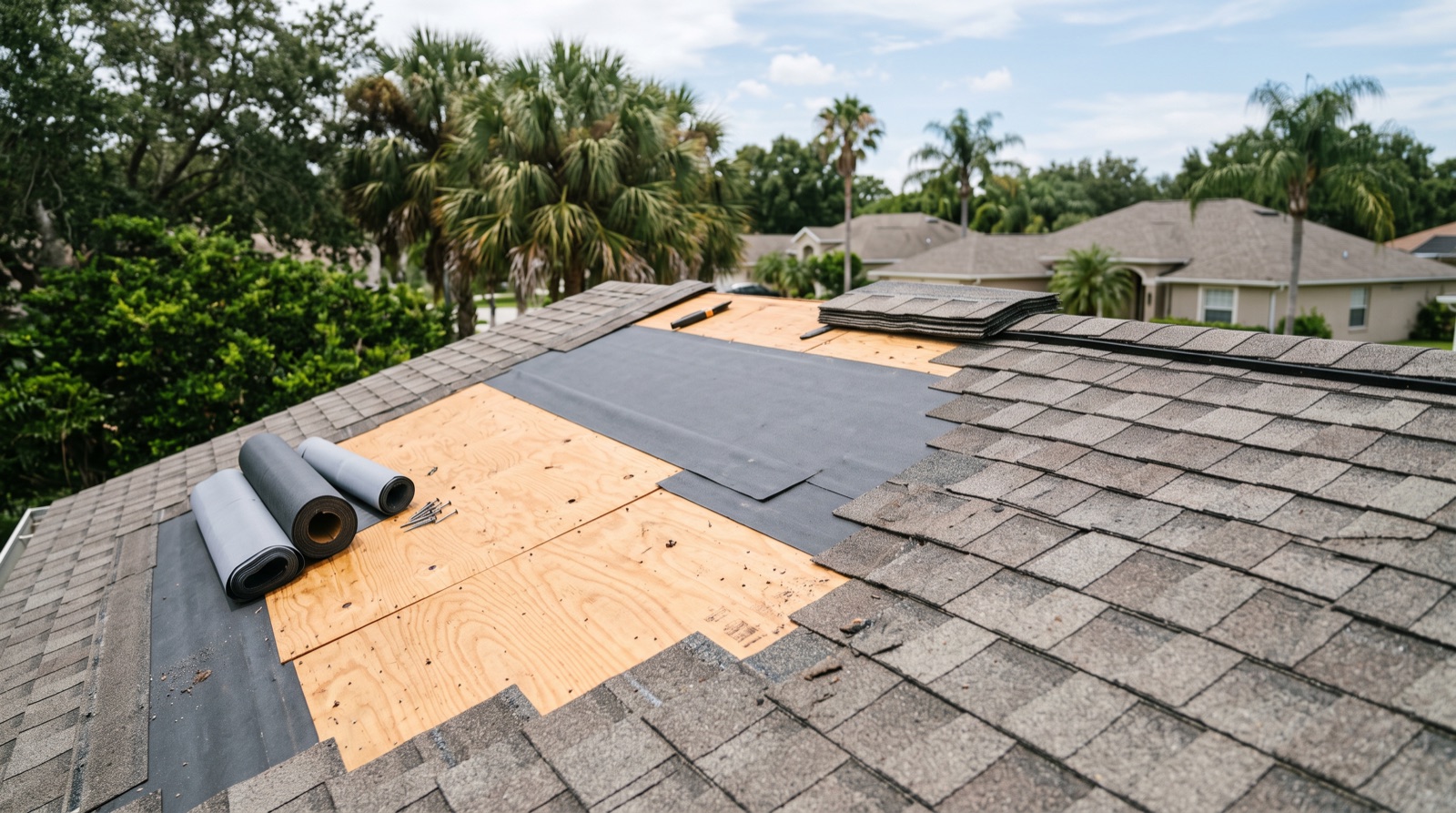
Water rarely stays on the surface once a leak begins. Moisture seeps through the underlayment and reaches the wooden decking beneath. The decking consists of plywood or oriented strand board sheets attached to the roof trusses, forming the structural base for all roofing materials.
An inspector checks the deck for softness, sagging, and dark rot stains. Soft decking cannot hold roofing nails securely during strong winds. When water penetrates the wood over months, the wood fibers decay and lose structural strength. A small surface leak with solid decking beneath requires only a localized patch. If moisture has spread across several sheets of plywood, repairing only the top shingles leaves rotted wood hidden below.

Replacing rotted wood decking adds labor and material costs, but skipping it leads to dips in the roofline and premature failure of any new shingles installed over the damaged area. A written estimate should always specify how damaged decking will be priced if rotted wood is uncovered during the project.
Florida building code rules on partial repairs
Many homeowners hear rumors that any storm damage automatically requires replacing the entire roof. State building regulations are specific on this point. Under Florida Statutes Section 553.844, if a roof was built or replaced in compliance with the 2007 Florida Building Code or a later edition, only the repaired or replaced section must meet the current building code in effect, even if the work covers 25 percent or more of the roof system.
This statutory exception allows contractors to perform legitimate partial repairs on modern roofs without triggering a mandatory full tear-off under local building codes. However, if your roof was permitted under an older building standard before March 2009, extensive damage may require bringing the entire roofing system up to current wind and water barrier standards.
Your local city or county building department enforces these rules. Any full roof replacement requires a building permit pulled by a contractor with a state license, followed by mandatory municipal inspections to verify proper nailing patterns, secondary water barriers, and final installation.
Existing layers and past leak history
The physical history of your roof plays a major role in determining whether a repair is practical. Building codes limit new layers over an old roof. The Florida Building Code does not allow a new covering over an existing one when the old roof is water-soaked or deteriorated, when it is tile, or when it already has two layers. Even when a second layer is allowed, it adds weight and hides the condition of the wood underneath.
If your roof already has multiple layers or previous patchwork across several sections, adding another patch often fails. Water can travel under upper layers and emerge far from the actual point of entry, making pinpoint repairs unreliable. In such cases, a complete tear-off down to the wood deck is the only way to find every source of water intrusion.

A history of recurring leaks in different rooms usually indicates that the underlayment has reached the end of its useful life. When the waterproof barrier breaks down across the entire surface, fixing one leak this month simply leads to another leak in a different spot after the next storm.
Questions every homeowner should ask before signing
Before you sign any roofing contract or authorize work on your home, ask the contractor these practical questions to protect your interests:
- Will this project require a building permit from the city or county, and will your company pull it?
- What specific photos will you provide showing the damage before work begins and after the repair is completed?
- How is damaged wood decking handled and priced if rotted plywood is discovered under the underlayment?
- What exact warranties apply to the materials and the labor workmanship for this scope of work?
- Does your written proposal list every material, underlayment type, and flashing detail item by item?
Reputable contractors welcome these questions and provide clear, written answers. Never accept verbal promises or vague estimates that combine multiple tasks into a single line item.
Insurance facts and policy considerations
When roof damage follows a storm, homeowners often ask how insurance fits into the decision. Your insurance company decides coverage and payment, and you are responsible for your deductible. You may want to contact your insurance company or agent to ask whether your policy covers the specific damage on your roof.
Under Florida law, an insurer cannot refuse to write or refuse to renew a homeowners policy solely because a roof is under 15 years old. For roofs that are 15 years or older, the policyholder can obtain a roof inspection before an insurer requires a full replacement. We can inspect your roof, document the damage with clear photos, and provide a written, itemized estimate that you can share with your agent.
Avoid contractors who offer to waive deductibles or claim they can handle the insurance claim for you. State law strictly prohibits contractors from paying or rebating deductibles, and assignment of benefits agreements for property insurance are void under current law. You keep control of your policy and your home at all times.
Frequently asked questions
Can a roof leak be repaired without replacing the whole roof?
Yes. If the leak is caused by localized damage such as loose pipe flashing, damaged valley metal, or a few missing shingles, a contractor can repair only the affected section. The rest of the roof must have sound decking and pliable materials to support the repair.
How do I know if the wood under my roof is rotted?
An inspector checks for spongy spots underfoot, visible sagging along the roofline, and water stains on the underside of the deck. A soft or decayed wooden deck requires replacing the damaged plywood sheets before installing new shingles.
Do I need a building permit for roof work in Florida?
Yes. Roof replacements and major repairs require a building permit from your local city or county building department. Licensed contractors pull the permit and arrange required building inspections.
What does Florida law say about roof age and insurance renewal?
Florida law states that an insurance company cannot refuse to issue or refuse to renew a policy solely because a roof is under 15 years old. For roofs 15 years or older, homeowners can provide an inspection showing remaining useful life before a replacement can be required.
SkyShield Roofing Pros provides free roof inspections with detailed photos, written itemized estimates, and required building permits for homeowners across Orlando, Kissimmee, Winter Park, Lake Nona, Sanford, Clermont, Altamonte Springs, and Winter Garden. Full roof replacements include manufacturer material warranties and our 10-year workmanship warranty, with service available in English and Spanish. Book your free roof inspection to review your roof condition with clear evidence and no sales pressure.
Leave a Reply