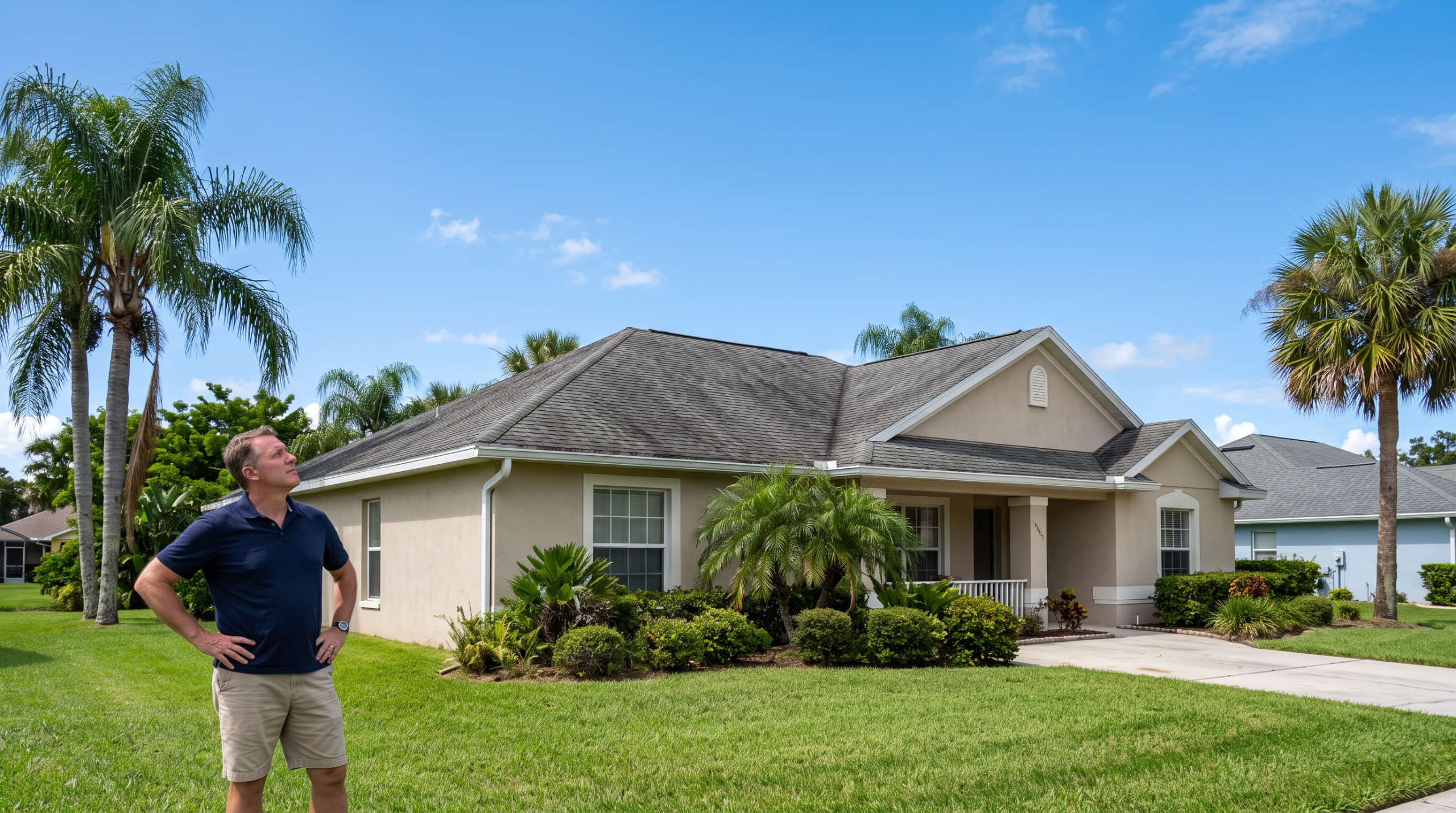
That notice in your mailbox is not a cancellation
You open your renewal envelope on a Tuesday afternoon and find a notice stating your homeowners insurance carrier requires a full roof replacement due to age. If your home in Orlando or anywhere in Central Florida has an asphalt shingle roof installed between twelve and eighteen years ago, this letter can create immediate stress. Many homeowners assume their coverage is ending next month or that they must immediately spend tens of thousands of dollars on a brand new roof.
The reality is more grounded. A letter about your roof’s age does not mean your policy ends today. Knowing what state law says lets you document your roof’s condition and talk to your insurance agent with facts in hand.
Roof age and insurance in Florida under state law
In Florida, insurance carriers manage high wind risk by setting strict underwriting criteria. The Florida Legislature set limits on how far roof age alone can decide a renewal.
Under Florida Statute 627.7011, an insurance company writing homeowners coverage cannot refuse to issue or renew a policy solely because of the age of the roof if the roof is less than 15 years old. This provides a clear baseline for residential property owners across the state. If your architectural shingle roof was installed twelve years ago and remains in sound physical condition with no active leaks or missing components, an insurer cannot cite age as the sole reason to non-renew your policy.

What the 15-year roof rule in Florida actually says
Once a roof reaches or exceeds fifteen years of age, the statutory rules adjust to account for natural wear while still keeping roof age alone from deciding a renewal. Under this part of the statute, often called the 15-year roof rule, an insurance company must allow the homeowner to obtain a roof inspection by an authorized inspector before requiring a mandatory replacement as a condition of renewal.
If that inspection indicates the roof has five years or more of remaining useful life, the insurer may not refuse to issue or renew the homeowners policy solely because of the roof age. This rule shifts the focus from an arbitrary calendar date to the actual structural and material condition of the roof covering. A well-constructed tile roof in Winter Park or a properly ventilated shingle roof in Clermont that has survived fifteen years without storm damage may still possess substantial service life.
Your insurance company decides coverage and payment, and you are responsible for your deductible. While the statute prevents non-renewal based solely on age when five years of life remain, carriers can still review the general condition of the property, past unaddressed damage, or general underwriting criteria. This is why obtaining an accurate, professional assessment is your most practical starting point.
What a roof inspection for insurance looks for
When an insurer requests documentation for an aging roof, they typically ask for a specialized inspection report or an updated four-point inspection. A thorough roof inspection for insurance examines specific structural components from the roof surface and perimeter to determine physical integrity and remaining service life.
Authorized inspectors evaluate several key items during this process:
- Granule coverage and surface wear: On asphalt shingles, inspectors check whether the protective mineral granules remain intact or if asphalt layers have begun to bake and crack under the Central Florida sun.
- Fastener and shingle adhesion: Inspectors look for lifted edges, broken seal strips, or loose fasteners that could allow wind uplift during a severe thunderstorm.
- Flashing and penetration seals: The metal flashing around chimneys, plumbing vents, skylights, and roof valleys must be secure, uncorroded, and properly sealed against water intrusion.
- Tile integrity and mortar condition: For concrete or clay tile roofs, the inspector documents cracked tiles, slipped pieces, and the state of the underlayment visible at the eaves.
- Evidence of moisture intrusion: The evaluation confirms whether there are visible signs of leaks, deck sagging, or soft spots along the roof plane.

Questions to ask your insurance agent this week
Rather than guessing what your carrier requires, schedule a brief call with your licensed insurance agent. Having a clear conversation helps you understand your policy options and specific underwriting timelines.
Here are practical questions to ask your insurance agent:
- Did the company send a formal notice of non-renewal, or is this an underwriting request for proof of roof condition?
- What specific inspection form does the carrier require to satisfy the five-year remaining useful life requirement under Florida Statute 627.7011?
- What is the exact deadline to submit the completed inspection documentation before underwriting closes my file?
- If minor maintenance or flashing touch-ups are completed, will the carrier accept a signed repair invoice and reinspection photos to maintain standard coverage?
Taking notes during this conversation gives you a clear checklist. You can then hand that checklist to the roofer who does the inspection, so every required photo and form is covered.
Frequently asked questions
Can my insurance company refuse to renew my policy only because my roof is 14 years old?
Under Florida Statute 627.7011, an insurer writing residential coverage cannot refuse to issue or renew a policy solely because of roof age if the roof is under 15 years old. The carrier can still look at the roof’s condition or unaddressed physical damage, but age by itself cannot be the reason for denial.
How does an authorized inspector prove five years of remaining life?
An authorized inspector examines shingle adhesion, granule retention, flashing seals, and general weathering, then documents the findings with dated photographs on the inspection form the insurer accepts. If the physical components show sound integrity and normal aging without structural failure, the report certifies the five-year threshold.
Does a roof repair reset the age of my roof in Florida?
Usually not. Insurers date a roof from its installation or full replacement, so ask your agent which date they have on file. Keep invoices and photos of every repair, because they show the roof has been maintained.
SkyShield Roofing Pros provides free roof inspections with clear photographic documentation and written, itemized estimates for homeowners across Orlando and Central Florida. When a full roof replacement is required, we pull all necessary city or county building permits and provide the manufacturer material warranty alongside our 10-year workmanship warranty. Our team assists homeowners in English and Spanish.
Leave a Reply